
Spring Bass Fishing On Lake Guntersville
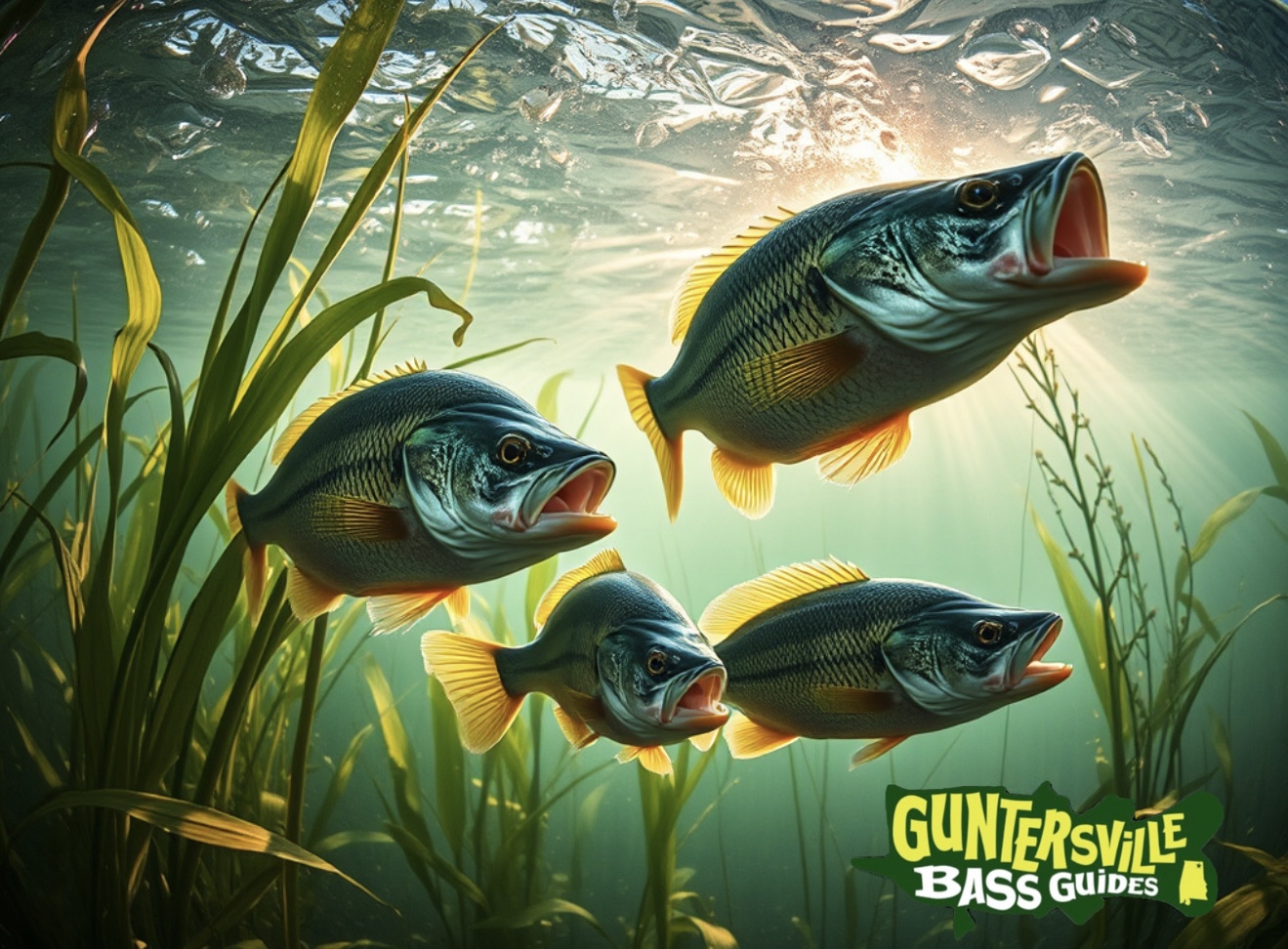
Spring on Lake Guntersville is not one single fishing pattern. It is a progression.
As winter begins losing its grip on North Alabama, largemouth bass start moving from their colder weather areas toward the places they will eventually use to spawn. Some fish may still be relatively deep. Others begin staging around grass, channel swings, creek mouths, bridges, points and the first available cover leading toward protected spawning water.
Then the lake changes again.
Water continues warming, daylight increases, grass begins developing and waves of bass keep moving. Eventually some fish reach shallow spawning areas while others remain in different phases of the seasonal migration.
That variety is part of what makes spring bass fishing on Lake Guntersville so interesting. During the same general period, an angler may be able to catch bass with an Alabama rig, jerkbait, ChatterBait, lipless crankbait or a slower presentation around shallow cover.
Do Not Fish The Calendar Alone
Late February, March and April are important spring months on Guntersville, but bass do not move simply because the calendar changes. Water temperature, weather trends, current, sunlight, grass development and repeated warming or cooling periods all influence where the fish are and how they behave.
What Is Spring Bass Fishing On Lake Guntersville?
Spring bass fishing begins with the prespawn movement and continues through the spawn and into the early postspawn period.
The original version of this article focused heavily on water in the 50 to 60 degree range. That is an important part of the prespawn, but it does not describe the entire spring season.
On Guntersville, anglers should think in terms of fish movement rather than one magic water temperature.
Prespawn
Bass begin transitioning toward spawning areas. Staging cover, grass edges, points, drains, bridges, creek channels and other travel routes can become important.
Spawn
Waves of fish move into shallower protected areas. Not every bass spawns at the same time, which means fish can often be found in several different stages across the lake.
Postspawn
After spawning, bass begin recovering and shifting again. Shallow cover, bluegill activity, grass, points and eventually offshore structure can all come into play.
Why Spring Gets So Much Attention From Big Bass Anglers
Lake Guntersville can produce quality bass throughout the year, but spring receives special attention because mature female largemouth are moving through their prespawn cycle and carrying additional weight before spawning.
Those fish still have to feed, and the seasonal movement can put large bass into areas where anglers have a realistic opportunity to encounter them.
That does not mean every spring trip produces a trophy.
Nobody can guarantee an 8 pound bass, a 10 pound bass or any other specific fish. What spring does provide is a period when many anglers intentionally focus on conditions and locations that historically give them a chance at better quality.
The Goal Is Opportunity
Trophy fishing is still fishing. Weather changes. Water conditions change. Bass move. The job is to recognize what stage the lake is in, adjust to those conditions and put as many good casts as possible into productive water.
How The Spring Progression Usually Develops
No two years unfold exactly the same way, but the general movement follows a recognizable progression.
Bass begin reacting to longer daylight periods and warming trends. Productive areas can still include deeper water, but fish increasingly position close to routes leading toward shallower spawning areas.
Staging areas become increasingly important. Bridges, creek mouths, grass edges, secondary points, drains and nearby breaks can hold fish moving toward the backs of creeks and protected pockets.
More fish move shallow. Warming afternoons can create noticeable changes in activity, especially around healthy vegetation, hard cover and protected water close to spawning habitat.
Bass begin using shallow protected areas for spawning. Because Guntersville is a large lake, anglers may encounter prespawn, spawning and postspawn fish during the same general period.
Fish begin leaving spawning areas and changing their feeding behavior again. Shallow grass, cover, bluegill related patterns, points and eventually deeper structure start becoming more important.
Productive Spring Bass Fishing Techniques
There is no single bait that wins every spring day on Lake Guntersville. The most productive technique depends on where the fish are in their seasonal movement and how they are positioned when you find them.
Alabama Rig
The Alabama rig remains an important cold water and prespawn tool for targeting bass feeding on schools of baitfish. It can be especially effective when fish are staging before making a stronger movement shallow.
ChatterBait
A vibrating jig is one of the most versatile ways to cover water around Guntersville grass. It can be worked over, through and along vegetation while looking for active bass.
Jerkbait
Jerkbaits can be excellent when bass are suspended around staging areas, grass edges, points and other structure. Cadence should be adjusted to water temperature and fish activity.
Lipless Crankbait
Lipless crankbaits have a long history on Lake Guntersville. They are especially useful for covering grass and triggering reaction bites from prespawn bass.
Texas Rig
When bass settle around shallow cover or become less willing to chase, a Texas rig can slow the presentation down and thoroughly work productive areas.
Moving Baits Around Grass
Swimbaits, crankbaits and other moving presentations can become important whenever bass are feeding aggressively around emerging vegetation and concentrations of bait.
Where To Look For Spring Bass On Lake Guntersville
Lake Guntersville covers a lot of water. Rather than searching randomly, spring fishing becomes easier to understand when you look for the routes bass use to move between winter areas and spawning habitat.
Bridges And Causeways
Bridge openings can concentrate current, baitfish and fish movement. They can also act as natural funnels between the main lake and large spawning creeks.
Grass Beds
Guntersville’s vegetation is one of the lake’s defining features. Healthy grass provides cover, food and travel routes throughout the spring progression.
Creek Mouths
Creek mouths provide transition areas between the main lake and shallower spawning water. Bass can stage around nearby points, drops, grass and channel related features.
Points And Breaks
Primary and secondary points give bass natural stopping places as they move shallower. Small depth changes can be especially important when they intersect with grass.
Drains And Ditches
Subtle depressions leading into large flats and pockets can function like underwater roads for fish moving toward spawning areas.
Protected Shallow Water
As the spawn gets closer, pockets, flats and protected banks become increasingly important. The best areas often have nearby access to slightly deeper water.
Water Temperature Matters, But It Is Only Part Of The Puzzle
Water temperature is one of the first things spring anglers watch, but it should never be considered by itself.
A warming trend can move fish shallower and increase activity. A strong cold front can slow that movement or push fish toward the nearest available cover and depth change.
Wind can reposition baitfish. Current can create feeding opportunities. Sunshine can warm protected water. Several cloudy days can change how fish use grass. A major weather system can temporarily interrupt a pattern that looked perfect the day before.
- Water temperature: Watch the trend, not just one reading.
- Weather: Pay attention to several days of warming or cooling rather than only the morning forecast.
- Wind: Wind can move bait and activate fish, but it can also change water clarity and boat positioning.
- Current: Moving water can improve feeding activity around bridges, channel related structure and other strategic locations.
- Grass: Healthy vegetation can influence the entire spring pattern on Lake Guntersville.
Spring Bass Fishing Gear
One rod cannot efficiently cover every spring technique. Matching the rod, reel and line to the presentation makes fishing easier and improves your ability to land better fish.
Moving Bait Setup
A medium heavy casting rod is a good general choice for ChatterBaits, lipless crankbaits and several other moving presentations around grass.
Jerkbait Setup
A medium power rod with the correct action generally gives an angler better control of a jerkbait and helps keep treble hooked fish buttoned up.
Alabama Rig Setup
Alabama rigs usually require heavier tackle than a jerkbait or standard moving bait. The total weight of the rig should determine the appropriate rod, reel and line.
There Is No Universal Spring Line Choice
Fluorocarbon is useful for many spring techniques because of its sensitivity and abrasion resistance, but braid, monofilament and combinations of different line types also have specific applications. The bait, cover and presentation should determine the line rather than using one line type for everything.
Electronics Can Shorten The Search
Modern fish finding electronics can be extremely valuable during the spring because they help anglers understand how bass are positioned before making hundreds of unproductive casts.
Side imaging can help locate grass edges, drains, hard spots and structure. Traditional sonar and down imaging can help determine depth and identify baitfish. Forward facing sonar can show how suspended fish are relating to bait, cover and individual presentations.
Electronics do not replace understanding seasonal movement.
They make that understanding easier to apply.
Spring Has Always Been Part Of The Guntersville Story
Guntersville Bass Guides has been fishing these spring transitions for years. Conditions and technology continue changing, but the basic challenge remains the same: understand what the lake is doing and adjust with it.

Planning A Spring Fishing Trip To Lake Guntersville
The best time to visit depends on what kind of fishing experience you are looking for.
Anglers focused on prespawn fishing may prefer the earlier part of the spring progression. Anglers who enjoy shallow fishing may prefer periods when more bass have moved toward spawning areas. Later spring can bring another transition as fish recover from the spawn and begin feeding differently.
Weather is always part of spring fishing in North Alabama. A trip may include warm sunshine, wind, rain, a cold front or several of those conditions within a short period.
Come prepared to adjust.
One Of The Biggest Spring Mistakes
Anglers sometimes arrive determined to fish the pattern that worked during their last trip or the pattern they saw somebody use online. Guntersville rewards anglers who fish the conditions in front of them instead of the conditions they expected to find.
Lake Guntersville Spring Bass Fishing FAQs
When does spring bass fishing begin on Lake Guntersville?
The transition can begin during late winter as warming trends and increasing daylight start moving bass toward prespawn areas. Late February through April is an important portion of the spring progression, but weather can move the timing earlier or later from one year to another.
What water temperature starts the prespawn?
There is no single temperature that turns the prespawn on everywhere at once. Water in the 50s is commonly associated with strong prespawn movement, but anglers should watch temperature trends, weather, daylight, baitfish and fish positioning rather than waiting on one exact number.
What is the best spring bait on Lake Guntersville?
There is no universal best bait. Alabama rigs, ChatterBaits, jerkbaits, lipless crankbaits, swimbaits and Texas rigs can all be productive depending on the stage of the seasonal movement and how the bass are positioned.
Is the Alabama rig good in the spring?
Yes. The Alabama rig can be extremely effective during colder water and prespawn conditions when bass are feeding on schools of baitfish, particularly before large numbers of fish move extremely shallow.
Where should I look for prespawn bass?
Look for staging areas and travel routes connecting deeper water with spawning habitat. Bridges, creek mouths, grass edges, points, drains, channel related structure and flats near deeper water are all worth considering.
Is March the best month for big bass on Lake Guntersville?
March is one of the most anticipated months because many mature female bass are in prespawn condition, but weather and seasonal timing vary each year. Excellent fishing can occur before or after March as the lake progresses through spring.
Can a fishing guide guarantee a trophy bass?
No. A legitimate fishing guide cannot guarantee the size of a wild fish. A guide can use experience, current conditions, electronics and seasonal knowledge to put anglers in productive situations and improve their opportunity.
Do beginners do well on Lake Guntersville in the spring?
They certainly can. Spring offers several techniques that can be learned quickly, and fishing with an experienced guide allows new anglers to spend more time fishing productive water rather than trying to understand a large unfamiliar lake by themselves.
Check Current Lake Guntersville Fishing Conditions
Spring changes quickly.
An article about seasonal patterns explains what normally happens. A current fishing report tells you what the lake is actually doing now.
Guntersville Bass Guides publishes Lake Guntersville fishing reports throughout the year with observations from recent trips, changing seasonal conditions and what the guide team is seeing on the water.
Book A Spring Bass Fishing Trip On Lake Guntersville
Spring dates are some of the most requested dates of the year on Lake Guntersville.
Guntersville Bass Guides™ offers guided bass fishing trips with experienced captains who spend their time following the lake as conditions change.
Whether the goal is learning Lake Guntersville, fishing with family or friends, improving a technique or simply putting yourself in position for a quality bass, the trip can be built around what you want from your day on the water.
Fishing conditions change constantly. No particular catch, number of fish or size of fish can be guaranteed.
