
Top 5 Winter Bass Fishing Tips for Lake Guntersville
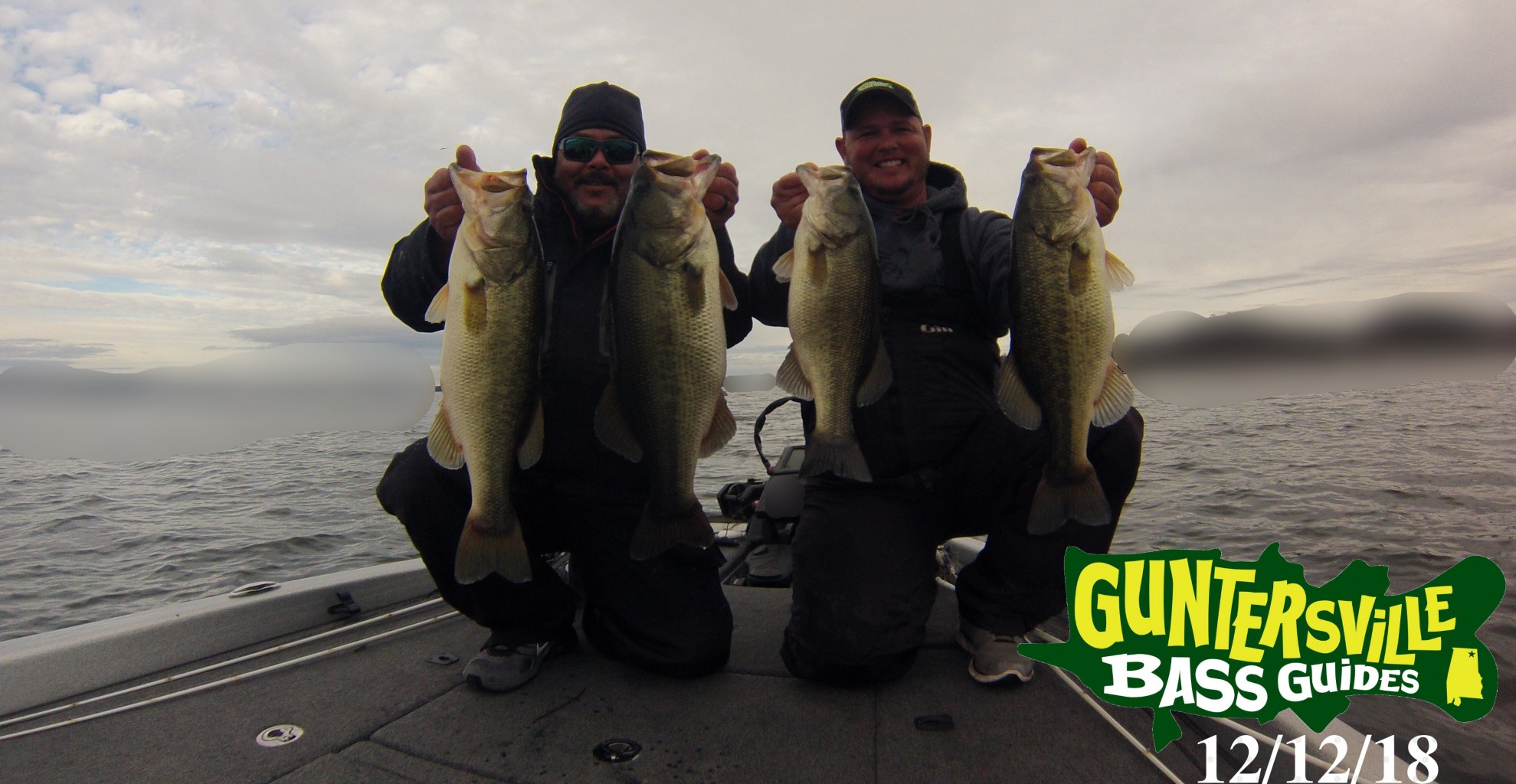
Lake Guntersville is a year round powerhouse for serious bass anglers, but winter brings its own challenges and some of the best rewards of the entire season. As water temperatures slide into the mid 50s to mid 60s, bass behavior changes quickly. The right approach, structure, and timing can produce big bass and true trophy bites.
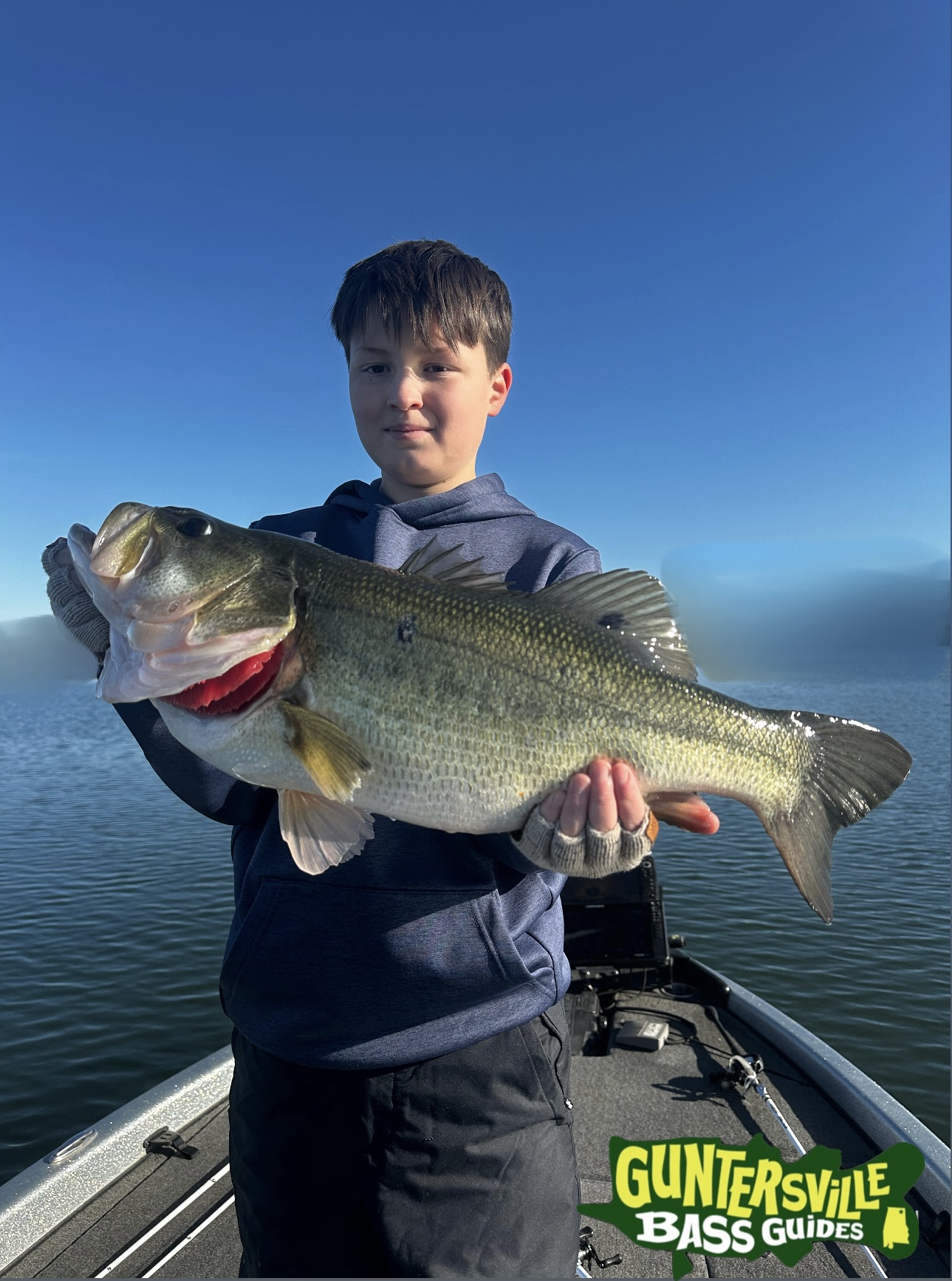
Looking to maximize your winter pattern? These are five of the approaches our USCG licensed Guntersville fishing guides rely on every season.
Winter fishing rewards patience and attention to small changes. Water temperature, bait location, sunlight, pressure, and presentation all influence when and where a quality bite develops.
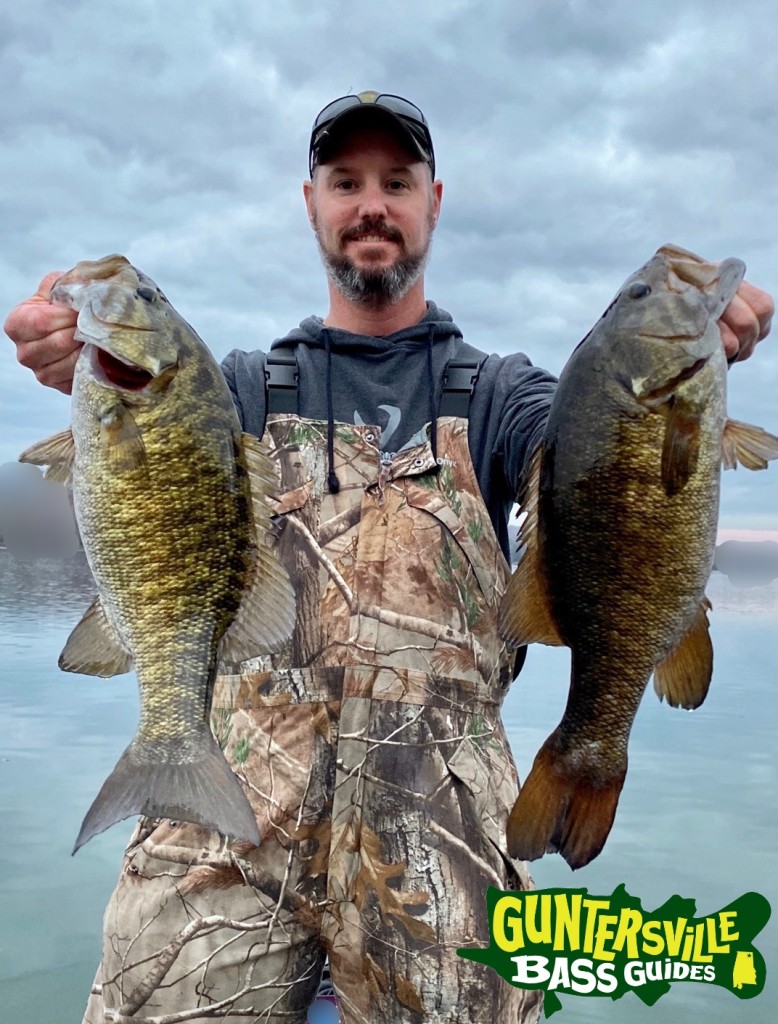
Slow Down Your Retrieve
Cold water slows a bass’s metabolism, making fast moving lures less productive in many winter situations. The goal is to mimic an easy, vulnerable meal.
Techniques like slow rolling a swimbait, dragging a jig, or working a jerkbait with long pauses consistently produce throughout December, January, and February.
If you are not sure how fish are reacting in your area, check the current lake conditions in our Guntersville Water Temperature Report .
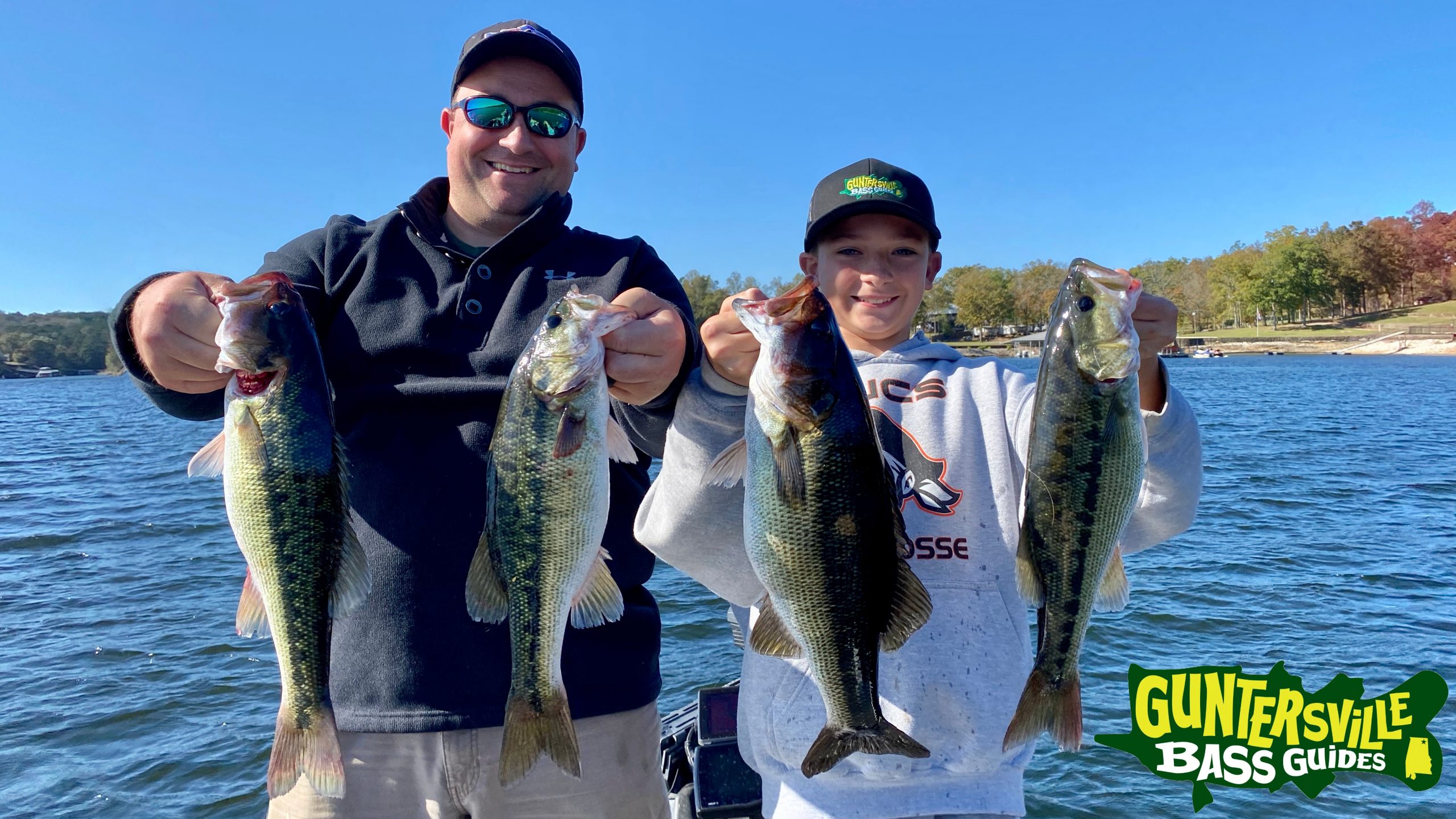
Use Cold Water Lures That Trigger Lethargic Bass
Some baits simply outperform when the water gets cold. Our cold water lineup includes:
- Jerkbaits for suspending directly in a bass’s strike zone with long pauses.
- Blade Baits for deep vertical presentations and strong vibration in cold water.
- Jig Head Minnows for targeting fish around structure, bait, and open water.
These lures imitate the shad bass feed on heavily this time of year. Anglers wanting to better understand electronics, bait movement, fish position, and forward facing sonar can learn more through our Advanced Sonar & Forward Facing Sonar Classes .
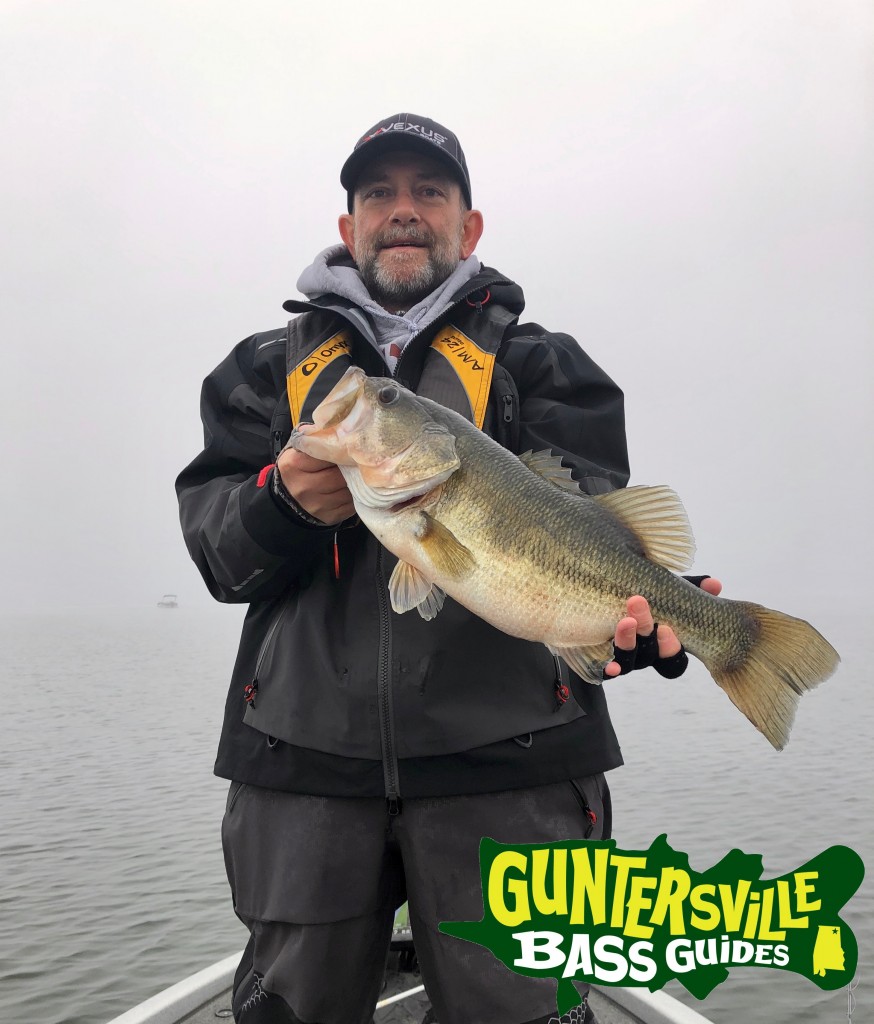
Target Deep Structure in Stable Water
Bass often use deeper, more stable water during winter, especially when temperatures take quick swings. High percentage areas include:
- Ledges
- Drop offs
- Shell beds
- Underwater brush piles
- Main river channel edges
Lake Guntersville has no shortage of these areas, and our guides spend the entire year tracking how bass use them.
If you would rather skip the guesswork, check guided fishing availability .
Fish During the Warmest Part of the Day
Unlike summer, when daybreak can be explosive, winter bass fishing often improves from late morning through early afternoon. As sunlight warms the water, baitfish can become more active and bass often respond with them.
Dress warm, stay flexible, and do not be afraid to fish slowly and thoroughly when that afternoon window begins to develop.
If you are traveling in, review our Lodging on Lake Guntersville guide before the trip.
Watch the Weather Closely
Winter fronts can flip the switch on Lake Guntersville. Bass often feed heavily ahead of a front or during a stable weather period after conditions settle.
Falling pressure can improve feeding activity, while rapidly rising pressure after a strong front can make fish less aggressive. The important part is recognizing the change and adjusting instead of forcing yesterday’s pattern.
If you are unsure which days offer the strongest big fish opportunities, our team fishes this lake year round and adjusts to those changes every day.
Slow Down, Read the Conditions, and Be Ready When the Window Opens.
Winter bass fishing on Lake Guntersville rewards anglers who fish deliberately and understand seasonal behavior. The bite may not always be about numbers, but this is one of the most productive times of year for connecting with a trophy largemouth.
Before planning your trip, review our current Lake Guntersville fishing rates or reserve your date online.
