
Lake Guntersville October Fishing Preview: Grass, Frogs & Tournament Strategy
October on Lake Guntersville can give an angler almost everything this lake is known for. Thick grass mats, scattered vegetation, topwater, flipping, roaming baitfish, bridge fish and eventually the kind of lipless crankbait bite that can seem to turn on almost overnight.
It can also make Guntersville feel incredibly stingy.
There are plenty of bass in this lake, but that does not mean they are spread evenly from one end to the other. As fall develops, fish can gather into surprisingly small areas. You may cover hundreds of yards of water without much happening and then reach one short stretch that seems completely different.
That is the October puzzle.
The goal is not simply to find grass, a bridge or a school of bait. The goal is to understand why the bass are using one particular piece of it and whether you can duplicate that situation somewhere else.
October Bass Are Not Everywhere
One of the easiest mistakes to make on Lake Guntersville is assuming that because a stretch looks good, bass should be spread all through it.
October does not always work that way.
Fish can get into pods and groups. One stretch may have the right grass, the right bait, the right depth and just enough current moving across it to keep food coming through. Another stretch that looks nearly identical from the boat may seem empty.
That is why a bite should never be treated as just a bite.
Look at exactly where it happened. Was the fish on a point in the grass? Beside a hole? Where two types of vegetation met? On a darker section of mat? On the down-current side of something? Was bait present?
Find The Difference
On Guntersville, a small difference can hold several fish. The better question after a bite is not only “What bait did it eat?” It is “What was different about that exact spot?”
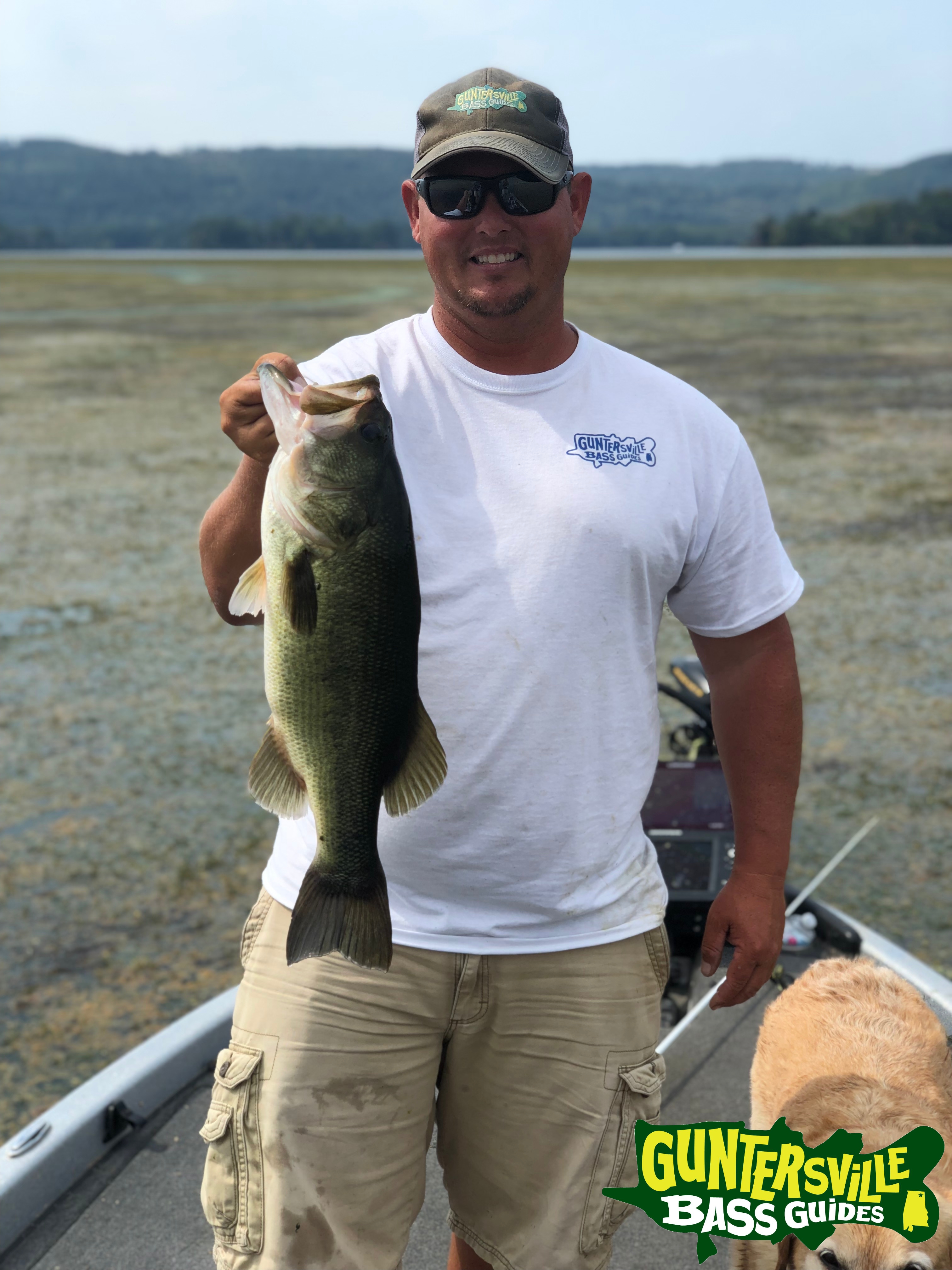
Before You Fish A Mat, Listen To It
One of the simplest clues around a good Lake Guntersville grass mat does not come through the rod.
You can hear it.
A really active mat can pop, crackle and sound almost like a bowl of Rice Krispies. That activity tells you life is underneath the canopy. Bluegill and other forage use those mats heavily, and bass know it.
That does not guarantee a bite, but when one mat is alive and another mat is silent, the active mat gets our attention.
Grass Transitions
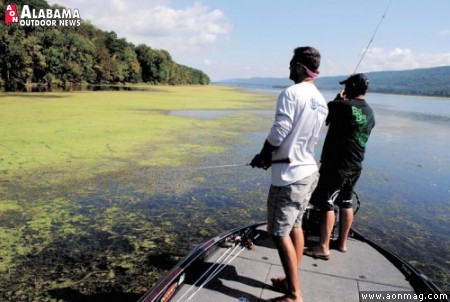
Pay attention where two types of vegetation grow together. A change in the grass creates another edge and another place for a bass to position.
Color Changes
A darker section beside lighter vegetation can mark a transition in grass type, density or condition. Those visual differences deserve casts.
Holes In The Mat
Holes and openings give bass an edge underneath the canopy. They are natural places to pause a frog or drop a heavier presentation through.
Uniform grass can hold fish, but irregular grass gives you targets.
Points, seams, holes, little drains, isolated pieces and places where the canopy changes are all easier for an angler to break down than a hundred yards of grass that looks exactly the same.
The Frog Is More Than An October Tradition
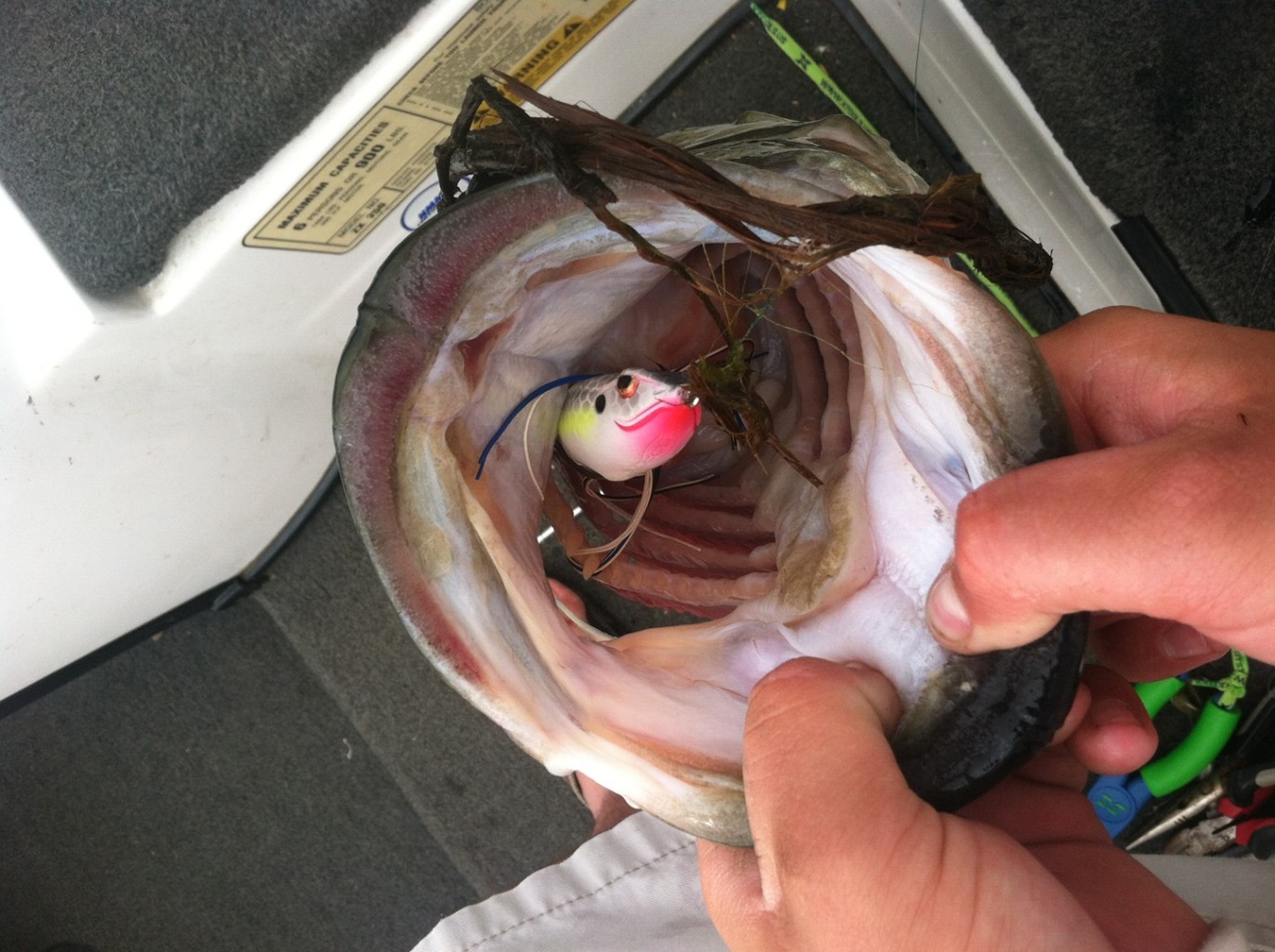
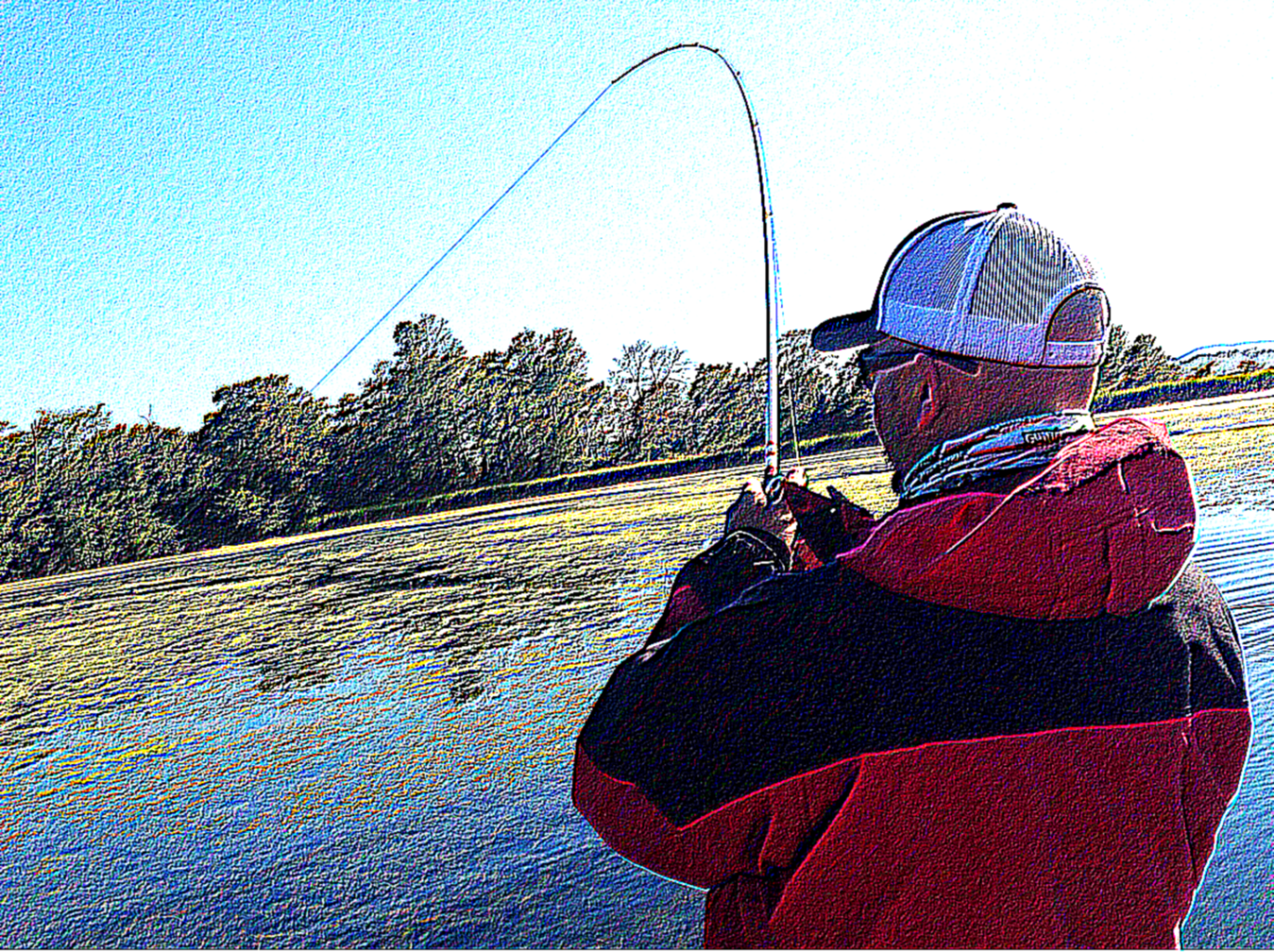
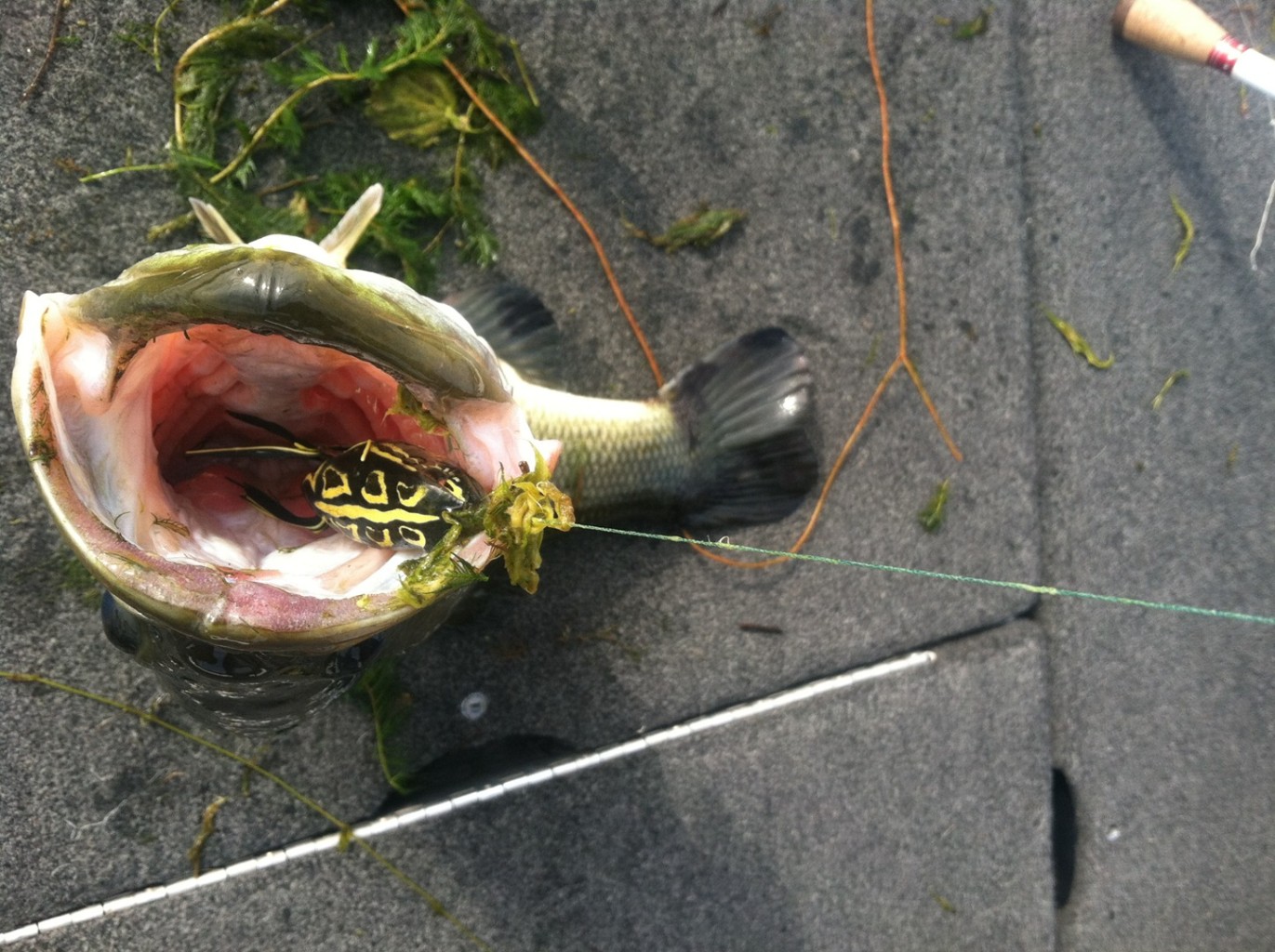
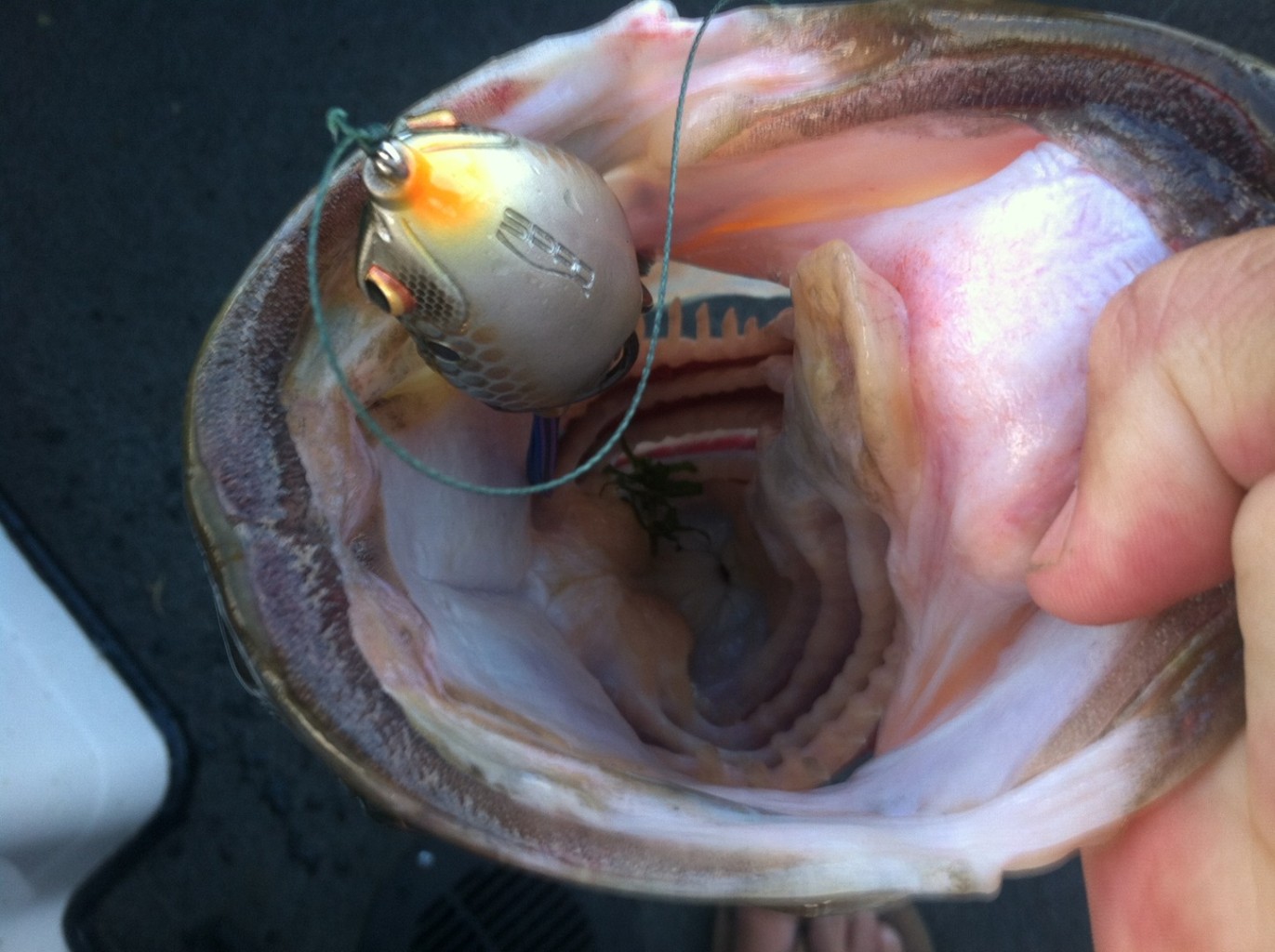
Frog fishing gets attention because the bite is violent, but there is much more to it than throwing a frog over any mat you can find.
Boat position matters. Casting angle matters. The speed of the frog matters. Knowing when to keep it walking and when to stop it over a hole matters.
Sometimes a bass will track a frog across several feet of mat before finally committing. Other times the strike comes as soon as the bait crosses a seam or reaches an opening.
The hardest part for somebody learning this technique is often the hookset.
When the mat explodes, your first reaction is to swing. That can pull the frog away before the bass has it. Give the fish that split second, feel its weight, then drive the hooks home.
Do Not Fish Every Mat The Same
If one particular color change, grass transition, hole or outside corner produces a bite, start looking for that same feature instead of treating the entire mat as one giant target.
When They Will Not Come Up, Go Get Them
Flipping Gives You Another Level Of The Grass
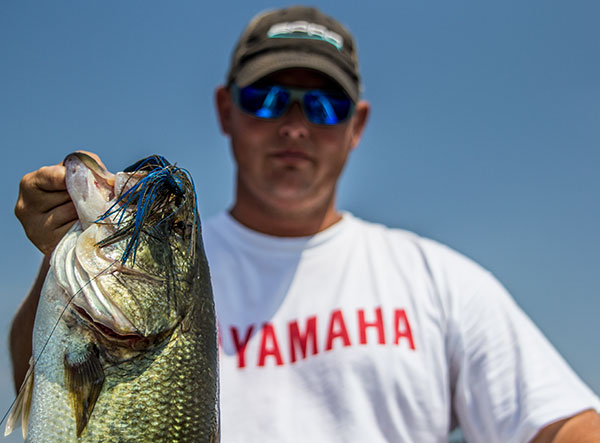
A frog lets you work over the top. Flipping allows you to get down into cover and fish bass that may not be willing to break through the canopy.
The same irregularities matter underneath the mat. Holes, seams, changes in vegetation, edges and places where the canopy is a little thinner can all create openings where a heavy bait can reach the fish.
Scattered grass can be flipped too. You do not need a solid roof over the water before a jig or other heavier presentation becomes useful.
And when you are putting a bait into heavy cover, this is not light-line fishing. Strong rods, strong reels and braided line are tools for getting a quality fish moving before it wraps itself in several pounds of vegetation.
Tournament Prep With Capt. Jim & Capt. Derek
For anglers coming to Guntersville to practice for a tournament, there is a difference between simply going fishing and trying to build a tournament plan.
That is where Capt. Jim Leary and Capt. Derek Remitz fit this particular October conversation.
Both are comfortable around thick grass, heavy tackle, frogs and flipping. More importantly, both understand that tournament preparation is not just about getting bites during practice.
You have to build something you can actually use when the tournament starts.
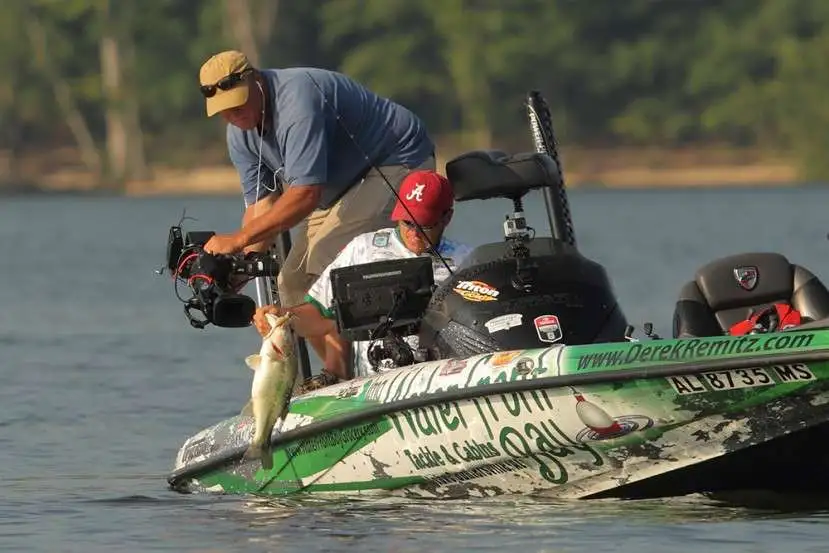
Capt. Derek Remitz
Derek brings legitimate high-level tournament experience to that discussion.
He won his first Bassmaster Elite Series event on Lake Amistad in 2007 with a four-day total of 111 pounds, 7 ounces, went on to earn Bassmaster Rookie of the Year that season and qualified for three Bassmaster Classics.
That background matters when an angler wants more than a list of baits. Tournament fishing involves decision making, timing, pressure, adjustments and knowing when a productive-looking area is worth committing to.
Capt. Jim Leary
Capt. Jim has spent years breaking down Lake Guntersville grass, helping tournament anglers practice and learning how small changes in vegetation, current, bait and fishing pressure can change an area. Heavy grass, frog fishing and flipping are not specialty situations here. They are part of understanding this lake.
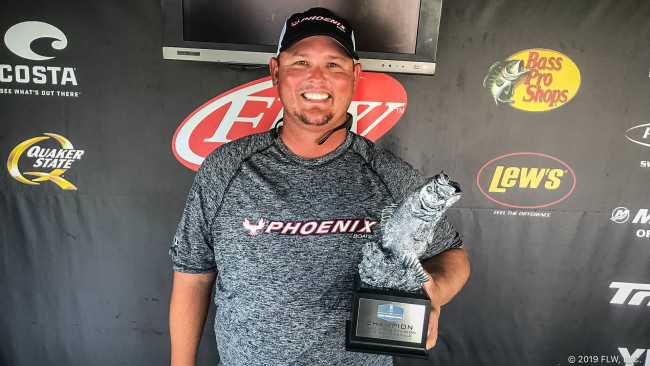
A Tournament Plan Has To Survive Tournament Morning
This sounds simple until you launch with a field of other anglers who practiced on the same lake and found some of the same water.
Finding a good bridge, grass point or mat during practice is one thing.
Being able to fish it when the tournament starts is another.
Know Your Best Water
Identify the areas that produced the right quality of fish instead of simply the places where you received the most bites.
Understand The Pressure
A tiny bridge opening or short grass stretch may be excellent, but it can also become difficult to fish once several tournament boats arrive.
Have Somewhere Else To Go
If somebody beats you to the primary area, the tournament cannot end mentally at 6:15 in the morning. Build secondary water during practice.
Know Why The Fish Were There
If the pattern was a grass transition, current seam or particular depth, that information can help you relocate the pattern instead of relocating one exact spot.
Do Not Chase Every Pattern
Guntersville can give you too many options. Frogs, flipping, bridges, topwater and offshore bait can all be viable without all of them belonging in your tournament plan.
Fish For The Right Five
In a five-fish event, a stretch that produces fewer bites can still be the right decision if those bites are the quality needed to compete.
Lake Guntersville gives you a lot of ways to catch bass. The hard part in a tournament is deciding which ones deserve your time.
Guntersville Bass Guides™A Little Guntersville Frog Tournament History
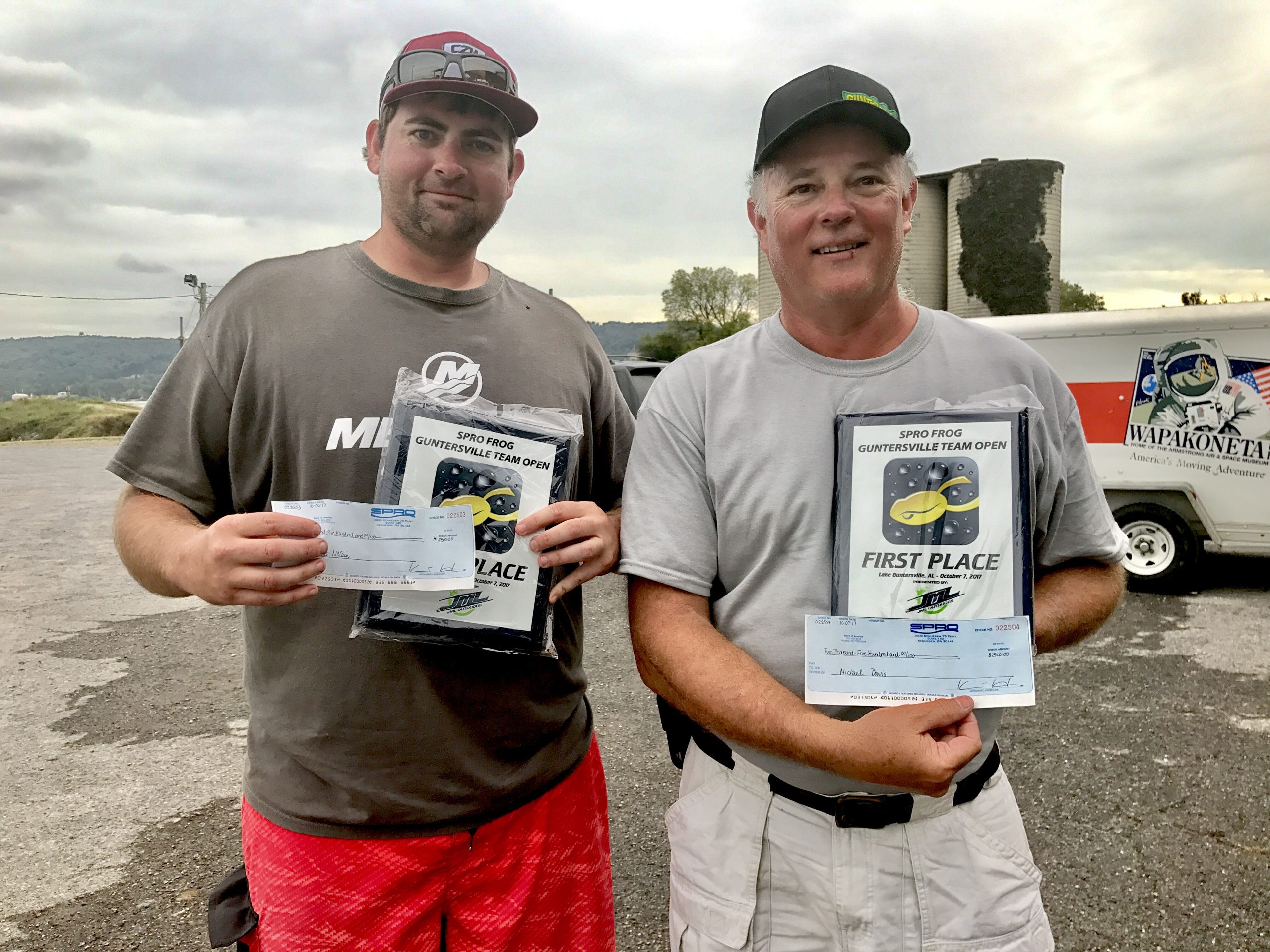
October 7, 2017
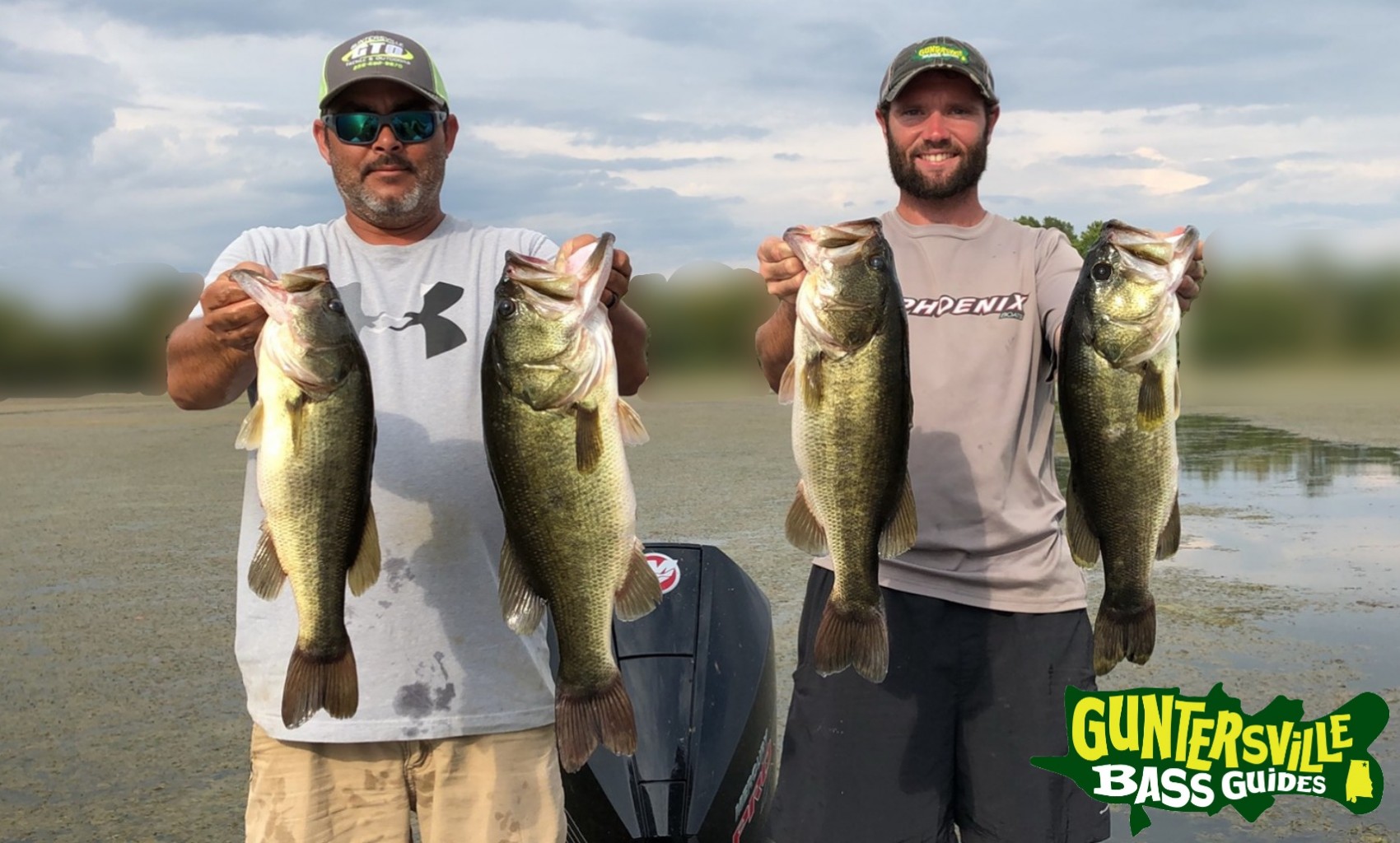
Mike Davis and Thomas McCain won the SPRO Frog Tournament on Lake Guntersville on October 7, 2017, an event Capt. Jim founded in 2012.
Capt. Jim organized and ran the tournament through its early years before eventually stepping away from running it. The SPRO Frog Tournament continues today, and it remains one of the events most closely associated with Lake Guntersville’s famous fall frog bite.
The 2017 picture is older, but the pattern behind it is not.
October is prime time for frog fishing on Lake Guntersville. When the grass develops the right canopy and bluegill are active underneath it, a frog can become one of the primary tournament presentations on the lake.
Do Not Let The Big Mats Make You Ignore Scattered Grass
Thick mats are easy to see and easy to talk about.
Scattered shallow grass can be just as important.
This is where a completely different October topwater program can develop. A buzz-style soft-plastic frog such as a Ribbit can cover scattered vegetation quickly. A walking bait can work over cleaner stretches. Poppers and prop-style topwaters can also become players when fish start looking up and feeding around bait.
The key is recognizing that better fish may only occupy one part of an otherwise huge flat.
You might fish a long distance without a bite, then suddenly have several opportunities within fifty yards.
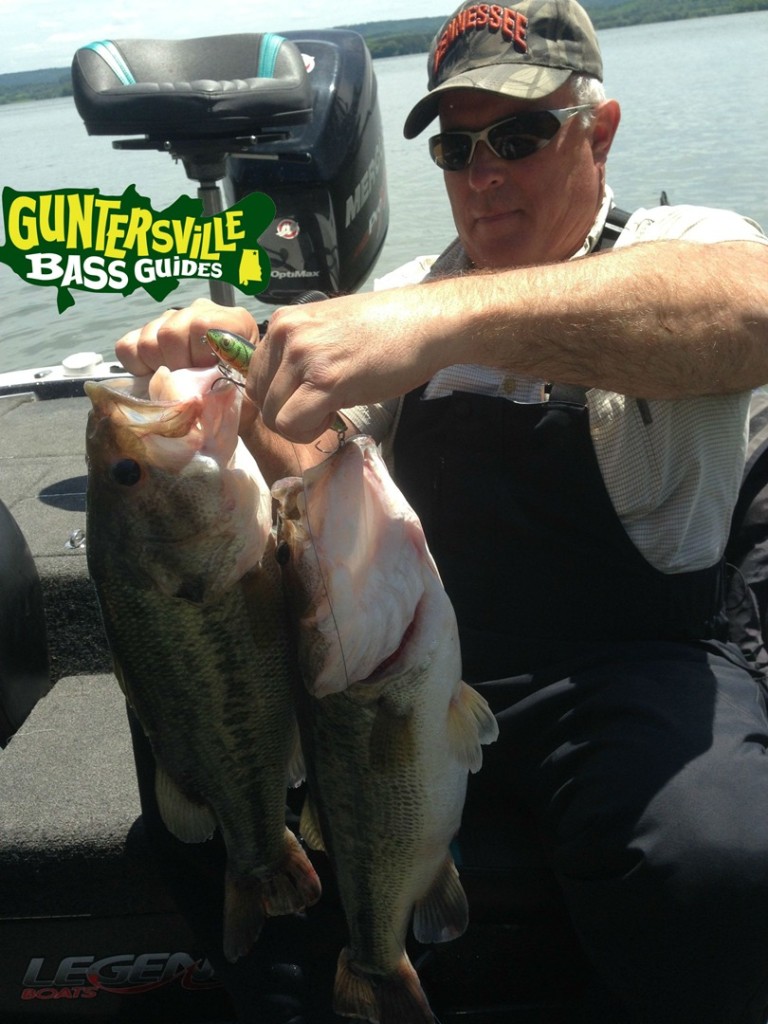
One Topwater Bite May Expose A Group
When a quality fish eats a walking bait, Ribbit, popper or similar topwater, slow down long enough to determine whether you found one roaming bass or a group using that stretch.
Current Is Always Our Friend
Lake Guntersville is part of the Tennessee River system, and current is always part of the conversation.
TVA controls water movement through the river system, and the amount of generation can change from one period to another. That is why experienced anglers pay attention to what the water is actually doing instead of assuming yesterday’s conditions will repeat themselves.
Moving water can reposition bait.
It can reposition bass.
It can make one end of a grass point, one side of a bridge or one edge of a creek channel more productive than the other.
Current does not automatically make every fish feed, but on a Tennessee River lake it can help organize the food chain. And organized bait is much easier for a bass to take advantage of than food scattered randomly through acres of water.
Grass Points
Current moving across an irregular grass point can create a feeding edge where bass can hold near cover while food comes past them.
Creek Mouths
Where creek water and the main river system interact, bait movement and water movement can create temporary feeding opportunities.
Bridges
A bridge already constricts a creek. Add moving water and the available path for bait becomes even more concentrated.
Outside Grass
Current across an outside grass line can make one section noticeably better than another even when the vegetation looks similar.
Check The Conditions, Then Fish What You Have
TVA generation and water movement can change. Use the available lake and generation information as one more piece of the puzzle, then let the bait and bass tell you how much the current matters that day.
Bridges Start Becoming Serious October Players
Bridges on Lake Guntersville should not be dismissed as obvious community holes.
They are obvious for a reason.
Most of the bridges anglers focus on are located inside creek systems. The bridge constricts that creek into a much narrower passage, creating a natural pinch point for anything moving through it.
Shad use those areas.
Crappie use them.
Bass use them too.
The productive zone can change. Fish may relate to riprap, current breaks, pilings, nearby grass, deeper water or bait suspended around the bridge.
In October, bridges can become legitimate tournament water.
The Problem Is Everybody Knows Where The Bridge Is
A productive bridge may fit your tournament strategy perfectly during practice. But if you arrive after several boats have already occupied the key water, you need another move. Fishing pressure has to be considered before tournament morning, not after you get there.
Watch The Bait
A bridge without active forage may simply be structure. When bait starts stacking around it, the entire area becomes more interesting.
Read The Current
Pay attention to which side of a piling, opening or riprap section receives the best water movement and where a bass can sit efficiently.
Respect The Crowd
Tournament strategy includes knowing when an area can handle more pressure and when staying too long is costing valuable fishing time.
Not Every October Bass Is Going To The Bank
This is one of the places where an angler can get trapped by the calendar.
It is October. The grass looks good. The weather feels more like fall. That does not mean every quality bass immediately moves shallow.
Guntersville still has tremendous amounts of bait in deeper areas, and some bass will continue roaming with those baitfish.
Those fish can suspend. They can move. They can be difficult to relocate from one hour to the next because the food they are following is moving too.
That does not make them uncatchable. It simply makes them a completely different problem from a bass sitting under a grass mat.
Grass Fish
These fish give you visible cover to break down. Mats, transitions, holes, points and edges let you create individual targets.
Roaming Fish
These fish may be positioned by bait more than cover. Electronics, bait movement and repeated observation become much more important.
Do Not Force Fall To Happen Faster Than It Is Happening
The calendar can say October while part of the bass population is still using deeper bait. Fish the conditions in front of you instead of the month printed at the top of the page.
At Some Point, The Lipless Crankbait Switch Flips
Every fall there is another bite sitting in the background waiting for the conditions to line up.
The lipless crankbait.
Around Guntersville, plenty of anglers simply call it a rattle trap bite regardless of the brand tied on the rod.
Exactly when that bite becomes a major factor is difficult to predict.
Sometimes it does not slowly develop. It feels like somebody flipped a switch.
You can be fishing scattered grass across the middle of a bay and suddenly a lipless crankbait becomes the best presentation you have. The fish get aggressive, the bait starts coming through the vegetation correctly and instead of lightly ticking it, bass start absolutely choking it.
That is one of the reasons October is so interesting.
The lake is changing while you are fishing it.
Contact The Grass
A lipless crankbait does not have to avoid vegetation. Contact can be the whole point. Learn how the lure feels loading into grass, how much pressure it takes to free it and what happens immediately after the bait breaks loose.
October Can Give You Two Completely Different Lakes
One angler may spend his day with a heavy rod, braided line and a frog working a mat in two feet of water.
Another may be watching bait on electronics over considerably deeper water.
Another may spend the morning on a bridge.
Somebody else may be covering scattered vegetation with a walking bait.
All of them can be fishing legitimate October patterns.
That is why Guntersville can be versatile and stingy at exactly the same time.

The October Guntersville Playbook
There is no single October pattern that is going to cover all of Lake Guntersville.
Some bass will be underneath thick mats eating bluegill.
Some will roam scattered grass and come up for a topwater.
Some will suspend with schools of bait.
Some will use bridges and creek pinch points where food and moving water become concentrated.
And somewhere along the way, that lipless crankbait bite is going to start making noise.
The important part is not trying to fish every one of those patterns in the same day.
Find what the fish are telling you. Pay attention to where the bite happened. Understand what was different. Look for the same situation somewhere else.
And if you are preparing for a tournament, do not stop at finding fish.
Build a plan for getting back to them, dealing with fishing pressure and making the next move when Plan A is already occupied.
There are a lot of bass in Lake Guntersville. They just are not everywhere.
That may be the most important thing to remember this October.
Patterns That Have Lasted
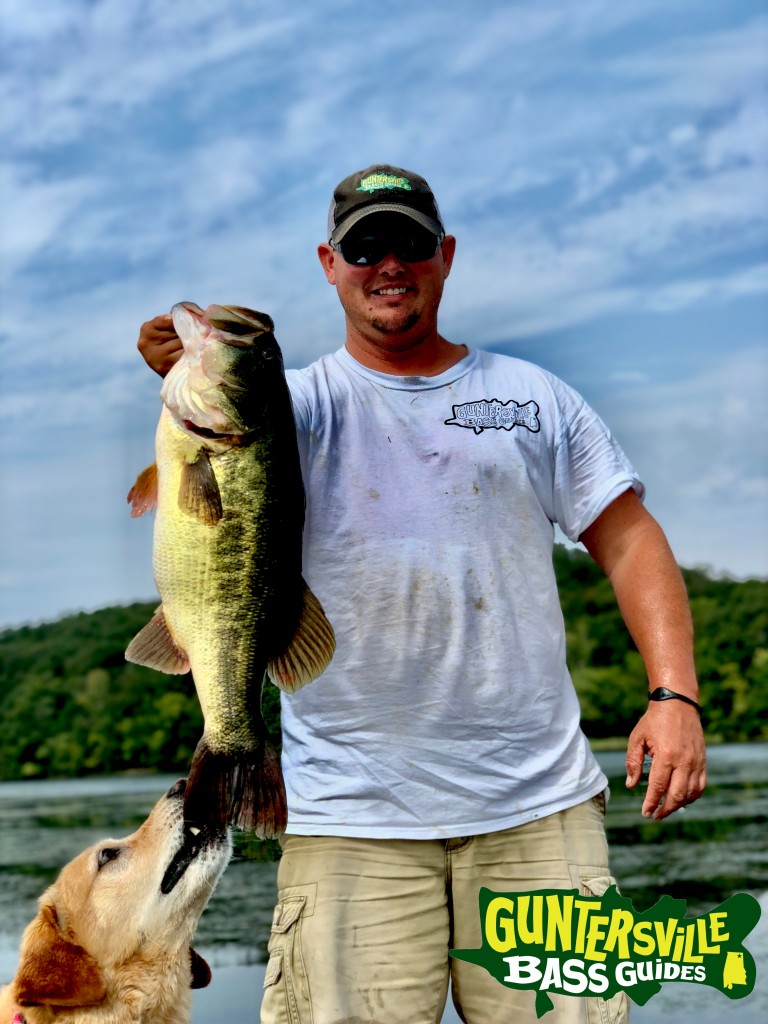
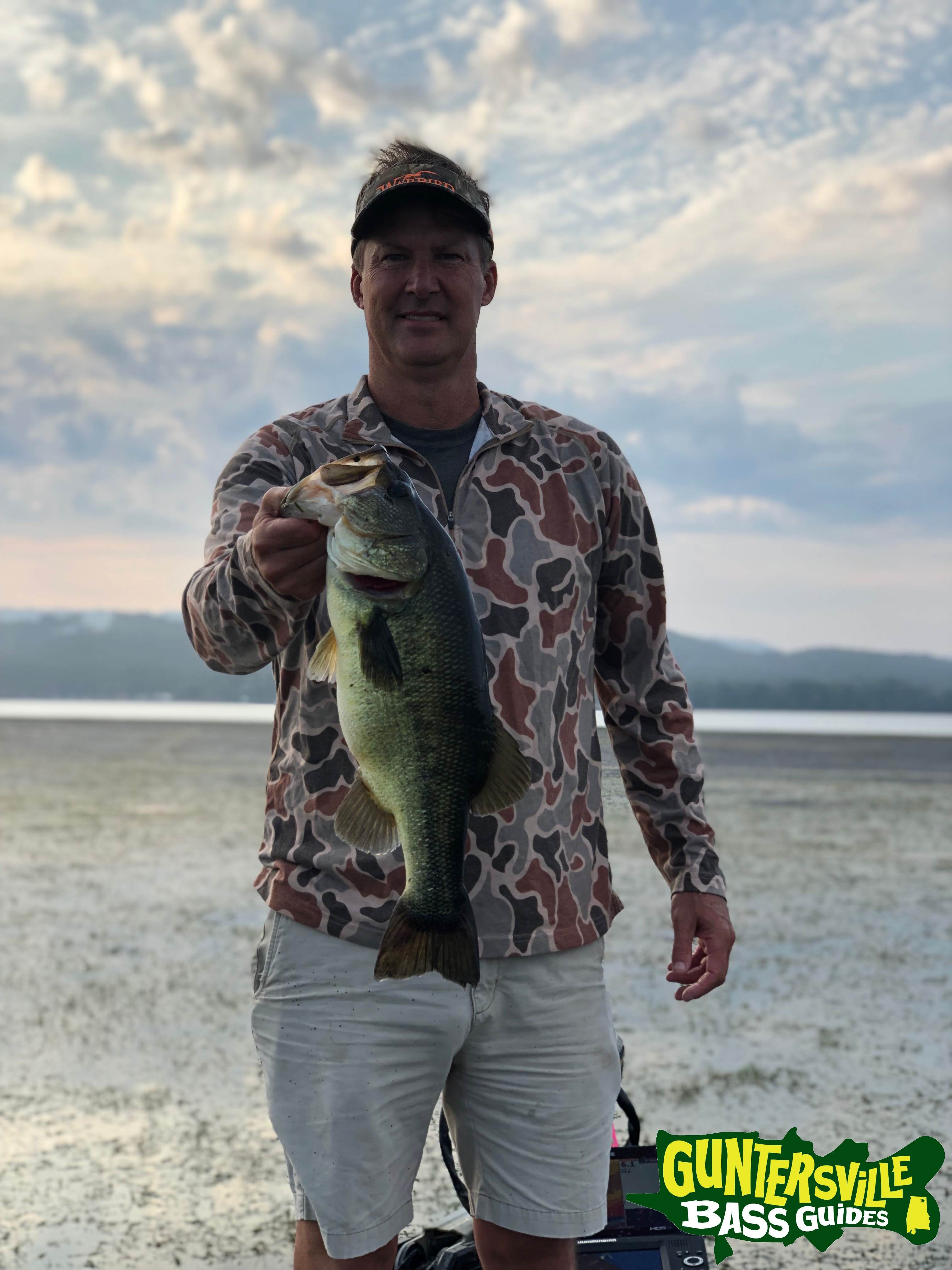
Several of the photos in this October preview go back a number of years.
That is intentional.
Grass changes. Water levels change. Weather changes. Bait moves and fishing pressure changes from year to year.
But the basic reasons a Lake Guntersville bass uses a mat, a grass transition, a topwater feeding area or a creek pinch point have not disappeared.
The old photographs are reminders that these are not patterns somebody invented for this week’s article.
They are part of fishing Lake Guntersville.

October On Lake Guntersville
October does not usually hand you one obvious answer on Lake Guntersville.
The fish can be under a mat, roaming scattered grass, following bait in deeper water or setting up around a bridge where current and forage come together. The pattern that matters in the morning may not even be the one that matters later in the day.
That is what makes this month challenging, and it is also what makes it so good.
Pay attention to the small changes. Listen to the grass. Watch the bait. Notice the current. Remember exactly where the bite happened and what was different about that spot.
And when you find the right group of fish, make the most of it.
October is here, the grass is ready, and Lake Guntersville is about to show just how many different ways it can be fished.
